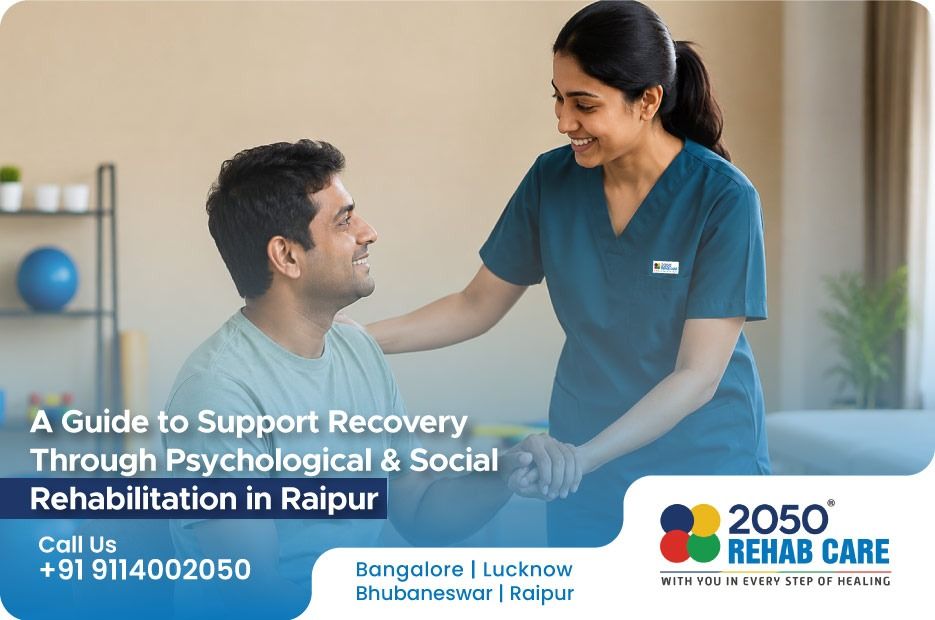
A Guide to Support Recovery Through Psychological & Social Rehabilitation in Raipur
Published on 8/21/2026An accident, illness, injury, addiction, or any other difficult life event may eventually pass, and the visible effects may begin to heal. But sometimes, the impact of what happened continues to remain in the mind long after the incident itself is over. It may gradually lead to fear, anxiety, emotional distress, loss of confidence, or social withdrawal.
These challenges can affect relationships, work, daily routines, decision-making, social interactions, and even a person's ability to feel like themselves again. Recovery, therefore, does not always end when a person leaves the hospital or when the immediate medical condition has been treated. As discussed in A Guide to Rehabilitation, the journey of recovery continues beyond medical treatment as individuals work towards regaining independence and returning to everyday life.
While physical wounds may receive immediate medical attention, the emotional, psychological, and social impact of an experience may also require specialised care and support. This is where Psychological & Social Rehabilitation becomes an important part of the recovery journey.
How Difficult Experiences Can Continue to Affect Everyday Life
A difficult experience does not always end when the incident is over. For example, someone may physically recover after an accident but remain afraid of travelling or returning to work. A person recovering from a serious illness may struggle with changes in confidence or independence. Someone going through addiction recovery may find it difficult to reconnect with family, social circles, or everyday responsibilities.
These experiences can gradually affect different areas of life, such as:
- Relationships with family and friends
- Confidence in social situations
- Work or educational responsibilities
- Daily routines and self-care
- Decision-making
- Motivation and participation in activities
This is why recovery should not always be measured only by visible healing or when the treatment has ended. Emotional well-being and the ability to function in everyday life also play an important role in a person's overall recovery.
The Connection Between Psychological Rehabilitation and Recovery
Recovery becomes more meaningful when both the mind and a person's ability to function in everyday life are addressed together. Psychological challenges such as fear, anxiety, emotional distress, or a loss of confidence can often affect the way a person interacts with others and participates in daily activities. At the same time, social isolation, difficulty maintaining relationships, or the inability to return to previous roles can further affect emotional well-being.
This is where psychological and social rehabilitation are closely connected. Psychological rehabilitation focuses on helping individuals understand and manage their emotional, cognitive, and behavioural challenges. Social rehabilitation, on the other hand, helps them gradually rebuild the confidence, skills, and connections needed to participate in everyday life.
In this way, recovery is not only about healing the body or managing emotional symptoms. It is also about helping a person feel capable of living, connecting, participating, and moving forward with greater confidence and independence.
Role of Psychological & Social Rehabilitation in Recovery
The focus of psychological and social rehabilitation is not only on reducing the impact of emotional or psychological difficulties but also on helping individuals rebuild the skills, confidence, and support needed to participate in everyday life. The WHO’S guidance on recovery-oriented psychosocial strategies highlights the role of interventions that support independent living and social skills as part of the recovery process.
Healing should not always be viewed as something that happens only to the body. An injury may heal with medical treatment and physical rehabilitation, but the experience of the incident may continue to affect the mind. Fear, anxiety, emotional distress, or a loss of confidence can influence how a person thinks, behaves, interacts with others, and responds to everyday situations.
As we all are aware about the fact that, the mind and body are closely connected. When a person is emotionally overwhelmed or struggling psychologically, it can affect motivation, energy, sleep, daily routines, social participation, and even their willingness to continue with the recovery process. In the same way that the body may need specialised care to regain strength and function, the mind may also need the right support to process difficult experiences and regain emotional balance.
Social & Psychological Rehabilitation in Raipur supports individuals in addressing the emotional and social challenges that continue after the immediate physical or medical condition has been treated. Depending on individual needs, psychological rehabilitation supports areas such as:
- Managing emotional distress
- Coping with fear and anxiety
- Improving emotional regulation
- Building emotional strength
- Addressing unhelpful behavioural patterns
- Improving confidence and self-awareness
- Regaining motivation
- Setting realistic and meaningful goals
The focus is not only on overcoming the difficult experience but also on helping the person regain the emotional strength, confidence, and ability needed for their overall recovery.
What Does Psychological & Social Rehabilitation Include?
The exact rehabilitation plan depends on the individual's needs, challenges, and recovery goals. However, professional Psychological Rehabilitation in Raipur includes several forms of structured support.
Psychological Support
Includes counselling and therapy to help individuals understand and manage emotional and behavioural challenges.
Coping and Behavioural Strategies
Helps in identifying unhelpful responses and developing healthier ways to handle everyday challenges.
Social and Communication Skills
Social skills training helps improve communication, confidence, and interpersonal relationships.
Life-Skills Development
Focuses on everyday skills such as managing routines, decision-making, problem-solving, and self-management.
Vocational Rehabilitation
Provides support to rebuild work-related skills and prepare individuals to return to employment or meaningful responsibilities.
Social Reintegration
Helps individuals gradually reconnect with family, friends, work, education, and the wider community.
These services support both emotional recovery and a person's ability to return to everyday life with greater confidence and independence.
Why a Personalised Rehabilitation Plan Matters
Every person responds to difficult experiences differently. Two people may go through similar situations but have completely different emotional responses and recovery needs. One individual may struggle mainly with fear and anxiety, while another may experience social withdrawal, difficulty returning to work, or loss of independence. As highlighted in the World Health Organization's guidance on person-centred recovery planning, recovery is a personal process, and support should take into account the individual's goals, values, preferences, and needs.
This is why rehabilitation should not follow the same path for everyone.
A personalised rehabilitation plan considers:
- The individual's current emotional and psychological challenges
- Everyday functioning
- Social and family environment
- Existing strengths and abilities
- Personal recovery goals
- Level of independence
- Areas where additional support may be needed
Setting realistic and meaningful goals makes the rehabilitation journey feel more manageable.
Recovery Is About More Than Moving Past the Incident
A difficult incident may become part of a person's past, but its effects can sometimes continue to influence the present. This does not mean that a person cannot move forward. With appropriate support, Mental Health Rehabilitation in Raipur helps individuals understand these challenges, develop coping skills, rebuild confidence, and reconnect with important areas of life.
For comprehensive rehabilitation care in Raipur, the goal is to help individuals move beyond simply surviving a difficult experience and towards rebuilding a life with greater confidence, connection, participation, and independence.
Psychological & Social Rehabilitation Support in Raipur
When the emotional and social impact of an experience continues to affect everyday life, specialised rehabilitation support can help address areas that may otherwise remain overlooked.
In this scenario, it is important to consider an approach that looks beyond the immediate condition and focuses on the individual's emotional well-being, everyday functioning, social participation, and long-term independence.
2050 Rehab Care provides structured psychological and social rehabilitation support designed around individual recovery needs. Through a personalized approach, the focus is on helping individuals work towards emotional well-being, practical life skills, social participation, and greater independence.
Need Personalised Rehabilitation Support? Get in Touch.