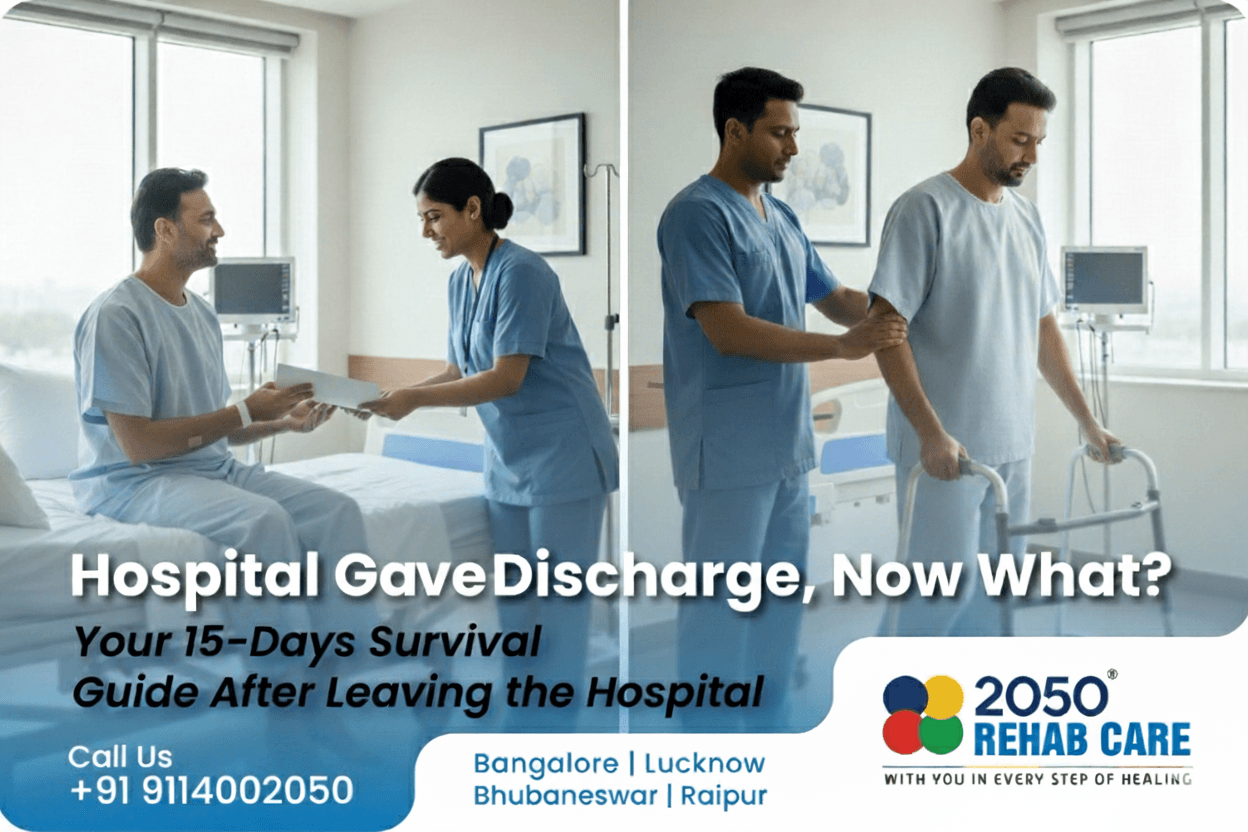
Hospital Gave Discharge, Now What? Your 15-Day Survival Guide After Leaving the Hospital
Published on 7/29/2026Hospital Discharged? Now What?
You’ve reached an important milestone—being discharged from the hospital. While it’s a moment of triumph, it can also be daunting. No more round-the-clock care or healthcare professionals just a call away. Now, the responsibility for your healing rests in your hands. This transition can feel overwhelming, but it doesn’t have to be.
Whether you're recovering from surgery, a medical condition, or a major illness, the journey ahead can be much smoother with the right support. Transitional care services in India, such as those provided by 2050 Rehab Care India, are here to guide you every step of the way, offering personalized care that ensures a comfortable, structured, and safe recovery. Through restorative rehab care IPD, you can continue to regain strength, improve mobility, and rebuild your confidence in your own healing.
But how do you navigate this transition smoothly? How do you manage medications, monitor symptoms, and regain your independence? Let’s break it down with a comprehensive 15-day survival guide to help you get back on track, step by step.
Days 1-3: Settle In and Stabilize
The first few days post-discharge are focused on rest and adjusting to your new routine. Your body is transitioning from a controlled hospital environment to the comforts (and challenges) of home. This phase is about stabilizing your health, monitoring vital signs, and ensuring that your surroundings are set up to support your recovery.
Day 1: Rest and Organize
Start by creating a comfortable recovery space in your home. Make sure that essential items—medications, water, phone, and snacks—are easily accessible. Ideally, your recovery space should be quiet, free of distractions, and well-lit. A peaceful environment helps promote rest, which is crucial in the early stages of healing.Review your discharge papers carefully. Take note of any follow-up appointments, prescribed medications, and any specific care instructions from your healthcare provider. It’s also important to look out for warning signs, such as unusual pain, swelling, or fever. If you have mobility issues, this is a good time to explore transitional care services in India, like those offered by 2050 Rehab Care India. These services can provide additional support, easing your transition from hospital to home.
Day 2: Medication Management
One of the most important aspects of recovery at home is managing your medications. Create a clear routine using apps or pill organizers to help track doses and times. Double-check the prescribed dosages and set reminders to avoid missing a dose. If you’re having trouble keeping track, consider professional help.Restorative rehab care IPD services at 2050 Rehab Care India can help with medication management. This might include assistance with supervised medication schedules and a clear understanding of how and when to take them for optimal recovery.
Day 3: Monitor Vital Signs
Your healthcare provider may have asked you to track your vital signs, like blood pressure, temperature, and heart rate. This helps catch any complications early on. Monitoring vital signs is especially important in the early days of recovery when your body is still adjusting.You can easily track temperature and blood pressure with digital devices at home. Keeping a log of your health metrics allows you to share the information with your doctor during follow-up visits. If you experience unusual symptoms like fever or swelling, contact your healthcare provider right away. In these early days, restorative rehabilitation IPD can offer professional monitoring to ensure that your health remains stable during recovery.
Days 4-7: Build Routines and Light Activity
Now that you’re a few days into your recovery, you should start integrating light activity and structured routines into your day. At this stage, you’re likely feeling a bit more stable, but your body still needs time to heal. This is a crucial period where you begin rebuilding your strength and stamina.
Day 4: Focus on Nutrition
Nutrition is key to healing. Start focusing on eating balanced meals that are rich in proteins, vitamins, and fiber. These nutrients help promote tissue repair, support your immune system, and provide you with the energy you need. Opt for foods that are easy on your digestive system, like soups, fruits, vegetables, and lean proteins.
If you're recovering from surgery or an illness that makes eating difficult, consulting a dietitian can be helpful. Many Recovery Care Centers in India, including 2050 Rehab Care India, offer tailored nutrition plans designed to support recovery and healing. These plans are personalized to your condition and will help ensure you're getting the nutrients you need.
Day 5: Gentle Mobility
Start incorporating light mobility exercises, such as short walks or stretches, as your doctor recommends. If walking is challenging, use assistive devices like walkers or canes to support your movement. The goal during this period is to gently improve circulation and muscle strength without overexerting yourself.Restorative rehab care IPD services offer professional guidance during this phase. Physical therapists at these centers can design a personalized exercise plan to promote safe, effective movement while avoiding complications like muscle atrophy.
Day 6: Emotional Health Check-In
The emotional side of recovery is just as important as the physical. Hospital discharge can bring up feelings of anxiety, depression, or loneliness. Talking to family and friends or journaling your emotions can help you process these feelings. If you feel overwhelmed, don't hesitate to reach out for professional support.Many transitional care services in India, such as those offered by 2050 Rehab Care India, integrate mental health support into their recovery protocols. This can include counseling, support groups, and therapeutic interventions that ensure you’re supported mentally and emotionally throughout your healing journey.
Day 7: Wound Care and Hygiene
If you have surgical incisions or dressings, ensure that you’re following the care instructions provided by your healthcare provider. Keeping wounds clean and dry is essential to prevent infections. If you notice any unusual signs like redness, swelling, or drainage, contact your doctor immediately.Some restorative rehabilitation IPD services offer routine check-ins for wound care and healing monitoring, providing an additional layer of support during this vulnerable stage of recovery.
Days 8-11: Strengthen and Reconnect
As you move into the second week of recovery, it's time to start rebuilding strength, regain your independence, and reconnect with your support system. The next few days are about strengthening your body, improving your mental health, and ensuring you’re staying on track with your recovery.Day 8: Physical Therapy Intro
If your doctor has recommended physical therapy, now is the time to start. Physical therapy is vital in helping you regain mobility and strength. Start by incorporating simple stretches or exercises as advised by your physical therapist. If home-based physical therapy isn’t enough, consider more intensive restorative rehab care IPD services that can provide hands-on therapy in a controlled environment.Day 9: Sleep Optimization
Good sleep is vital for healing, but many people struggle with insomnia post-discharge. Establish a regular sleep routine and create a relaxing environment by dimming the lights and avoiding screen time before bed. Aim for 7-9 hours of sleep each night to allow your body to fully rest and recover.Structured sleep environments, like those offered by Recovery Care Centers, can promote better sleep through consistent schedules and calming practices.
Day 10: Social Support
Social interaction is an essential part of emotional healing. Invite friends or family members for visits, even if they’re brief. Isolation can hinder your progress, both emotionally and physically. Support from loved ones helps boost morale and gives you the emotional strength to continue with your recovery.For those requiring a more structured social environment, transitional care services like those offered by 2050 Rehab Care India provide communal settings to encourage social interaction and mental wellness during recovery.
Day 11: Symptom Tracking Journal
Tracking your progress is crucial for recovery. Start a journal where you log daily symptoms, changes in your condition, and your emotional state. This will not only help you stay organized but also provide your doctor with valuable data during follow-up visits. Restorative rehabilitation IPD programs often encourage patients to track symptoms, as this information helps tailor a personalized treatment plan.Days 12-15: Transition to Independence
The last phase of your recovery is about becoming more self-reliant while continuing to monitor your health and seek support when needed.Day 12: Gradual Increase in Activity
Start incorporating light household tasks into your day, such as tidying up, folding laundry, or preparing simple meals. Listen to your body—if you feel fatigued, take a break. 2050 Rehab Care India and other Recovery Care Centers provide guidance during this stage to ensure you're increasing activity at a safe and comfortable pace.
Day 13: Follow-Up Appointments
Follow-up appointments are critical to assess how your recovery is progressing. Prepare a list of questions or concerns to discuss with your doctor. If transportation is an issue, many restorative rehabilitation IPD facilities offer transport assistance to make sure you don’t miss an important visit.
Day 14: Preventive Measures
At this stage, discuss long-term preventive care with your healthcare provider. This could include vaccinations, screenings, or lifestyle changes that will help avoid readmissions or further complications. Restorative rehab care IPD places a strong emphasis on long-term health management to prevent issues down the road.Day 15: Reflect and Plan Ahead
Congratulations! You’ve made it through the first 15 days of your recovery. Take some time to reflect on your progress and assess if you need ongoing support. If you feel confident, you can continue to manage your recovery independently, but don’t hesitate to reach out to Recovery Care Centers or transitional care services for continued support if needed.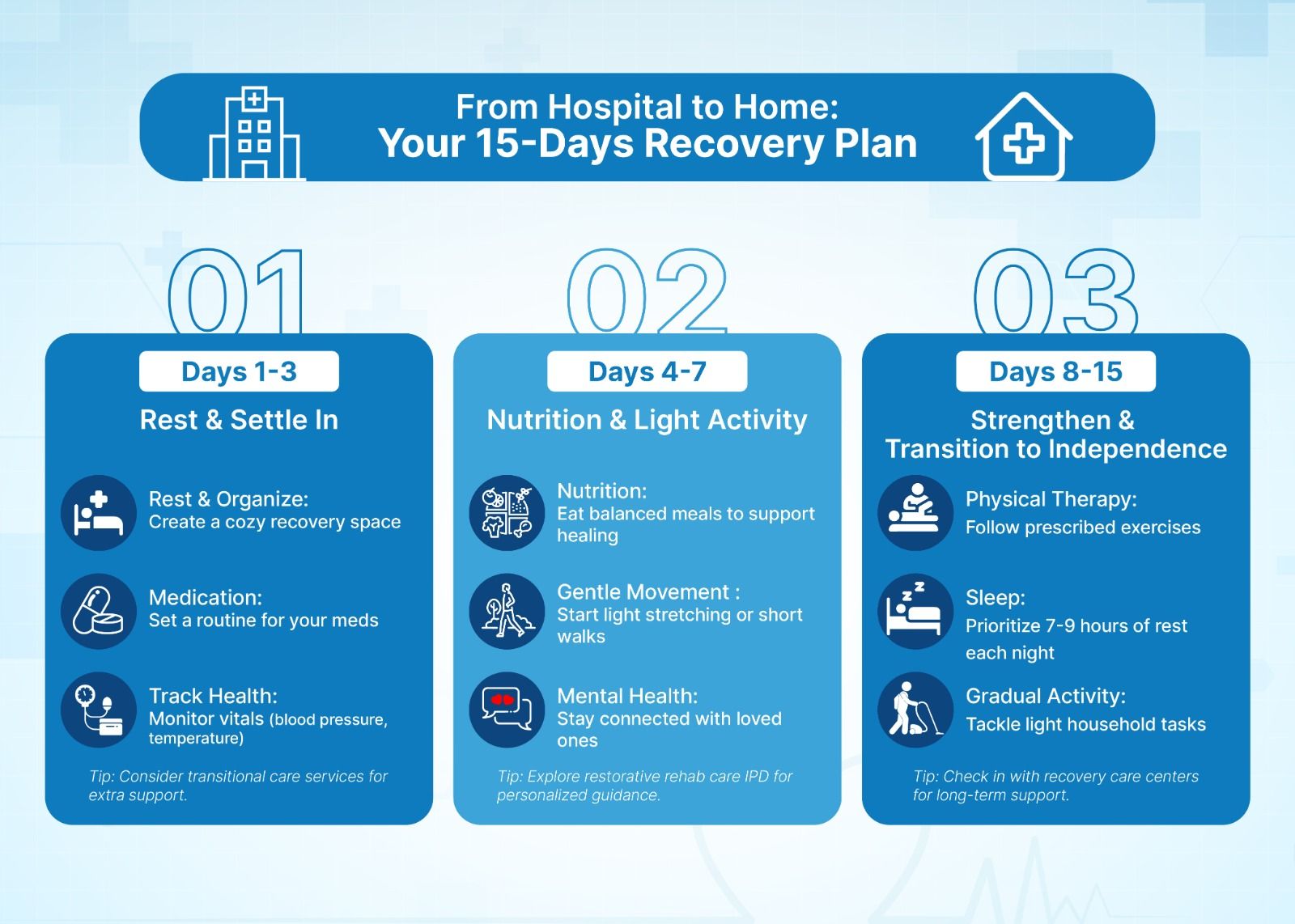
Why Choose Professional Support Like 2050 Rehab Care India?
While recovery at home is an option for many, some conditions require specialized care to prevent complications and ensure optimal healing. 2050 Rehab Care India is one of the best restorative rehab IPD centers in India, offering comprehensive transitional care services that include physical therapy, nursing, and holistic wellness programs. These services are designed to reduce the risk of readmission, accelerate recovery, and provide compassionate, patient-centered care.If you feel uncertain at any stage of your recovery, don't hesitate to reach out to a professional facility. Whether it’s medication management, physical therapy, or emotional support, these centers provide the resources you need to get back to your best.
Remember, recovery is a journey. Pace yourself, listen to your body, and seek help when you need it. You’re not alone on this path—there’s support waiting for you every step of the way.